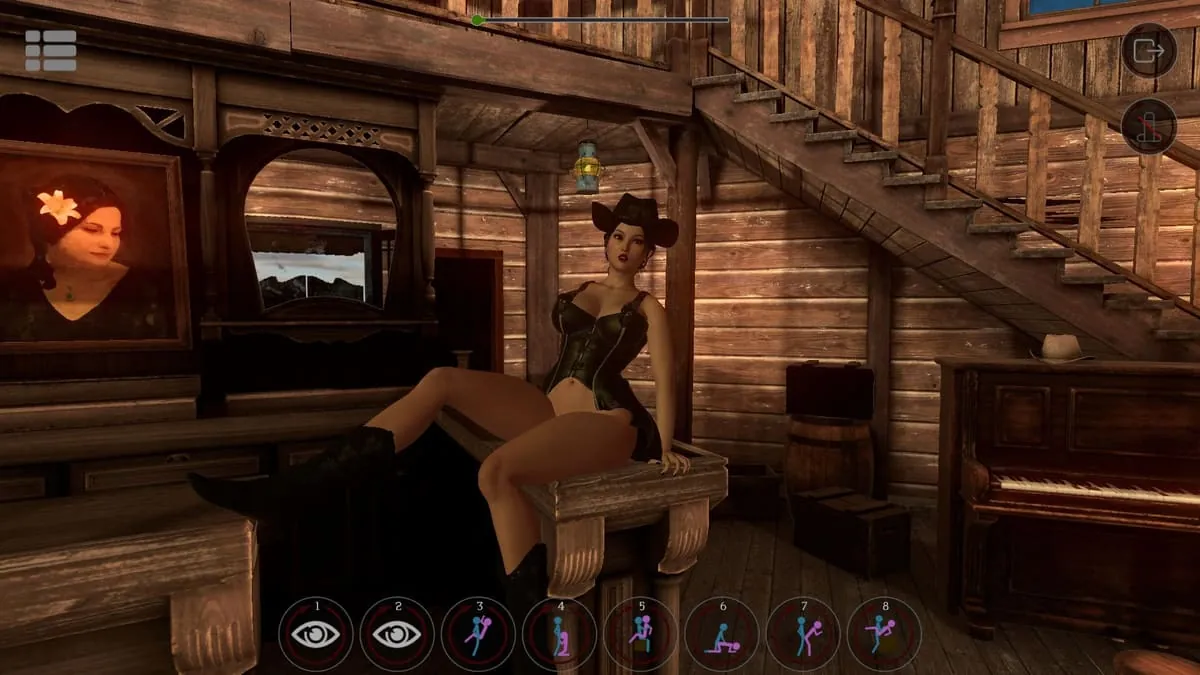
Depraved Awakening
Play Depraved Awakening
Depraved Awakening Screenshots

















Depraved Awakening review
Uncover the secrets of Free City in this choice-driven detective thriller
Depraved Awakening stands out as a choice-driven visual novel that combines mystery, detective work, and mature storytelling in a compelling narrative experience. Set in the gritty world of Free City, players take on the role of a private investigator tasked with uncovering the truth behind a client’s suspicious death. This guide explores everything you need to know about the game, from its core mechanics to its branching storylines, helping both newcomers and experienced players navigate the mysteries that await in this atmospheric thriller.
Understanding Depraved Awakening: Core Gameplay and Story
Stepping into the shoes of a private investigator in a rain-slicked city, where every shadow hides a secret and every friendly smile might be a lie—that’s the immediate, gripping promise of Depraved Awakening. This isn’t just another story you watch unfold; it’s a world you actively tear apart, clue by painful clue. At its heart, the Depraved Awakening story is a classic, yet deeply personal, private investigator mystery. You play as Felix, a down-on-his-luck PI who takes what seems like a straightforward case: look into the apparent suicide of a powerful client’s son. But in Free City, nothing is straightforward. What starts as a simple Free City investigation quickly spirals into a conspiracy that threatens to swallow you whole. The genius of this noir visual novel experience is how it hands you the magnifying glass and says, “Your move.” 🕵️♂️
This guide will peel back the layers of this intricate title. We’ll explore what makes its gameplay tick, how your decisions truly matter, and why the setting of Free City is as much a character as anyone you’ll meet. If you’re ready for a story where your intellect and instincts are constantly tested, you’re in the right place.
What Makes Depraved Awakening a Unique Visual Novel Experience
So, what sets this game apart in a sea of narrative adventures? 🎮 It’s the brutal, beautiful marriage of a hardboiled detective tale with genuine, consequential player agency. The Depraved Awakening visual novel refuses to be a passive experience. It’s a choice-driven detective game that demands your attention and rewards your curiosity.
I remember my first playthrough vividly. I approached it like a book, thinking my choices were just flavor. I missed a subtle clue during an interview, shrugged it off, and focused on being the tough guy with a suspect. Hours later, I hit a wall in the case. A crucial connection was impossible to make because I’d dismissed that earlier detail. The game didn’t flash a “YOU FAILED” screen; the narrative simply closed off a path, leaving me to face the consequences of my oversight. That moment changed how I saw the entire genre. This is a game that respects your intelligence and punishes your haste.
The core pillars that define this experience are:
- A True Detective Simulator: You don’t just read about Felix finding clues; you actively search environments, combine evidence in your inventory, and draw conclusions. The game’s logic often mirrors real investigative deduction.
- Meaningful, Character-Defining Choices: Every dialogue option shapes Felix’s personality. Are you a cynical bruiser, a compassionate listener, or a shrewd manipulator? The city and its inhabitants react to you accordingly.
- Mature, Unflinching Storytelling: The narrative tackles complex themes of corruption, desire, and moral ambiguity without sugar-coating. It feels like a lost chapter from a great noir film novelization.
- Branching Narrative Gameplay with Stakes: The story splits and diverges constantly based on your discoveries and decisions. Finding a hidden piece of evidence can unlock entirely new scenes and suspect interrogations.
- Atmosphere as a Narrative Tool: The haunting jazz score, the carefully crafted soundscape of rain and city noise, and the stylized art drench every moment in palpable mood.
It’s this potent combination that elevates Depraved Awakening beyond a simple story. You’re not just following a mystery; you’re living it, with all the confusion, breakthroughs, and danger that entails. 🔍
The Investigation Mechanics: How Your Choices Shape the Narrative
This is where the rubber meets the road in this choice-driven detective game. The branching narrative gameplay isn’t an illusion; it’s a complex web of cause and effect built on two core activities: gathering evidence and conducting interviews.
The investigation loop is incredibly satisfying. You’ll enter a location—a seedy apartment, a corrupt corporate office, a neon-drenched nightclub. The scene is presented, and you must physically click to examine points of interest. A discarded note, a peculiar stain, a photograph tucked in a drawer. Each item you collect goes into your case file. This isn’t just busywork. Later, when questioning a suspect, you can present evidence to challenge their lies or pry for more information. The game won’t hold your hand and say, “Use Item A on Person B.” You must listen to their testimony, spot the inconsistencies, and decide which piece of hard evidence proves they’re lying.
Let me give you a concrete example from my own case files. Early on, I investigated the victim’s apartment.
The Scenario: I was interviewing a nervous witness connected to the victim. She claimed she hadn’t seen him for weeks and knew nothing about his recent state of mind.
My Evidence: In my inventory, I had two key finds from the apartment: a half-empty bottle of expensive whiskey with two glasses, and a receipt for that same whiskey dated just three days ago.
The Choice: I could take her statement at face value and move on. Or, I could confront her. I chose to press her gently at first, then presented the receipt.
The Outcome: She faltered, admitting she was there recently but swore they just talked. Sensing the bigger lie, I then presented the two glasses. This broke her story completely. She confessed to a deeper, more complicated relationship, unveiling a whole new motive and suspect I would have never discovered otherwise. This single decision opened up a new branch of the story, leading me down a path to one of the game’s more shocking endings.
This is the essence of the Free City investigation. Your success isn’t about fighting skills; it’s about observation, logic, and rhetorical skill. The following table breaks down the primary tools at your disposal:
| Investigation Tool | How It Works | Impact on Story |
|---|---|---|
| Scene Examination | Click to interact with the environment. Find physical clues, documents, and hidden items. | Unlocks new evidence for your inventory. Missing a clue can permanently block narrative paths and potential endings. |
| Dialogue Trees | Choose Felix’s tone and approach: empathetic, aggressive, sarcastic, or professional. | Determines character relationships, unlocks exclusive information, and can lead to immediate conflict or cooperation. |
| Evidence Presentation | Select a clue from your case file to show during a conversation. | Can force characters to reveal truth, expose lies, change their attitude, or even trigger new story events. Incorrect use can anger them and shut down dialogue. |
| Case File & Deduction | Review all collected clues, character profiles, and notes in your menu. | Allows you to piece together connections manually. The game often expects you to understand the link before you can act on it. |
The balance here is masterful. You’ll spend time deeply engrossed in conversations, trying to read between the lines, and equally tense moments silently scouring a room, knowing the one thing you overlook could be the key to everything. It’s this branching narrative gameplay that makes every playthrough feel uniquely yours. No two detectives will solve the case exactly the same way.
Exploring Free City: Setting, Atmosphere, and World-Building
Free City isn’t just a backdrop; it’s the silent, brooding antagonist of the Depraved Awakening story. 🏙️ This is a place that wears its corruption like a cheap suit—visible to anyone who cares to look. The noir visual novel experience is poured into every pixel and line of dialogue, building a world that feels both timeless and urgently real.
From the moment the title screen fades in with a mournful saxophone melody, you’re transported. The art style uses stark shadows and dramatic lighting, painting each scene like a graphic novel panel. Rain is almost a permanent character, streaking down windows and reflecting the garish neon of street signs. The sound design is impeccable: the distant wail of sirens, the murmur of a crowded bar, the oppressive silence of a deserted alley. This atmosphere does more than set a mood; it informs the story. The pervasive gloom of Free City mirrors the moral ambiguity of the case. There are no pristine heroes here, only shades of gray struggling in the dark.
The world-building is woven seamlessly into the private investigator mystery. You learn about the city’s power structures not through exposition dumps, but through off-hand comments from bartenders, headlines on discarded newspapers, and the worried glances of small business owners paying “protection” fees. You see the stark divide between the gleaming towers of the corporate elite and the crumbling brick of the working-class districts. Each location you visit—from a high-end art gallery to a dockside smuggling den—adds another piece to the puzzle of how Free City operates, and more importantly, who really controls it.
This environment directly fuels the Free City investigation. The city’s corruption isn’t just thematic; it’s a practical obstacle. Cops can be paid off, witnesses can be intimidated, and evidence can vanish from police lockers. You can’t trust the system because the system is part of the disease. This forces you, as Felix, to rely on street smarts, informants, and your own wits. The setting creates the perfect playground for a choice-driven detective game, because the “right” legal choice is often unavailable. You’re constantly making calls based on a personal moral code in a world that has none.
Ultimately, understanding Free City is key to solving the case. The victim’s life, the motives of the suspects, and the source of the conspiracy are all rooted in the city’ unique brand of rot. To uncover the truth of the Depraved Awakening visual novel, you must first learn to navigate its treacherous streets and see the secrets it holds in every shadowed doorway. Your journey through this story is as much about decoding a city as it is about solving a crime, making the conclusion you reach all the more powerful and personal.
Depraved Awakening delivers a compelling mystery experience that rewards careful investigation and meaningful player choices. The game’s atmospheric setting in Free City, combined with its branching narrative structure, creates a detective thriller that keeps players engaged throughout multiple playthroughs. Whether you’re drawn to mystery narratives, choice-driven storytelling, or mature visual novel experiences, Depraved Awakening offers a rich and immersive journey. For players seeking a game that respects their intelligence and offers genuine consequences for their decisions, this title stands as a noteworthy entry in the visual novel genre.